Flexibility in the Construction Daily Report: Innovations for More Complex Projects
Centralization, customization, and efficiency in day-to-day construction
There are several practices to keep construction projects organized. Engineers often record daily occurrences through Construction Daily Reports (CDRs) — a way to keep track of a project’s daily progress.
Within Construct IN’s system, Visi, the Construction Daily Report could only be recorded once per day. During our research, we discovered that this limitation was actually a barrier to reaching larger clients. For this reason, we began exploring ways to make the tool more flexible.
The client demand that paved the way for CDR evolution
When we started studying this feature, in December 2024, 79 clients already had the Construction Daily Report module activated.
We realized there was an opportunity here: we could make the tool more competitive compared to other systems in the market.
The restriction of creating only one report per day was a blocker for some users. Clients such as Tools and Carrefour mentioned the need to create multiple reports without this limitation.
Our first step was to make the tool more customizable, so it could be adapted to projects of different sizes and sectors — enabled by greater flexibility.
Why multiple reports made sense
From a business perspective, making the Construction Daily Report tool more flexible aligned perfectly with Construct IN’s vision at the time. The company was focused on centralizing project data to accelerate decision-making during execution.
We created a solution that supported complex projects while also helping the company enter strategic sectors, such as industrial and logistics projects.
At the same time, this functionality was fully aligned with the company’s quarterly goal: Scale and Stabilize in New Markets. Allowing multiple reports per day addressed a recurring need in complex projects by enabling segmented records by areas, teams, or suppliers. This improvement promoted greater centralization, reduced rework, and adapted the platform to the diverse realities of construction management.
"As a manager of a residential project with multiple towers and construction companies across different disciplines, I want to record daily activities segmented by tower and discipline so I can quickly visualize clear reports and make more informed decisions."
Balancing customization, efficiency, and centralization
Taking all these factors into account, our solution was to enable the creation of multiple CDRs per day. However, we also recognized the need to help users stay organized and segment these reports. For this reason, we added options for users to customize fields as they wished.
This strengthened the tool, broadening its appeal to new markets and client profiles. The idea was to become a robust, customizable solution for increasingly complex projects.
Key improvements included:
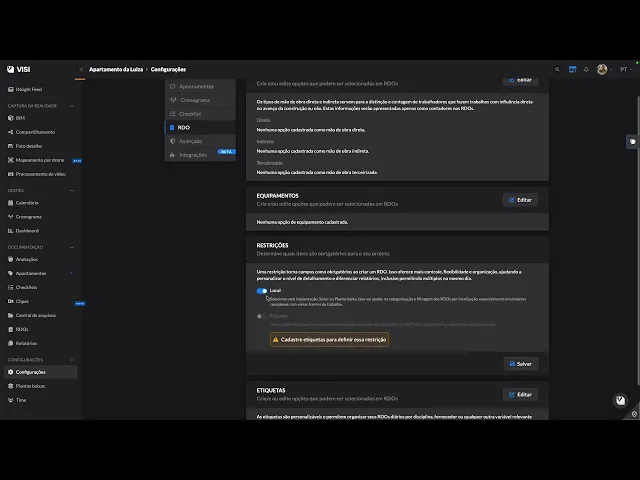
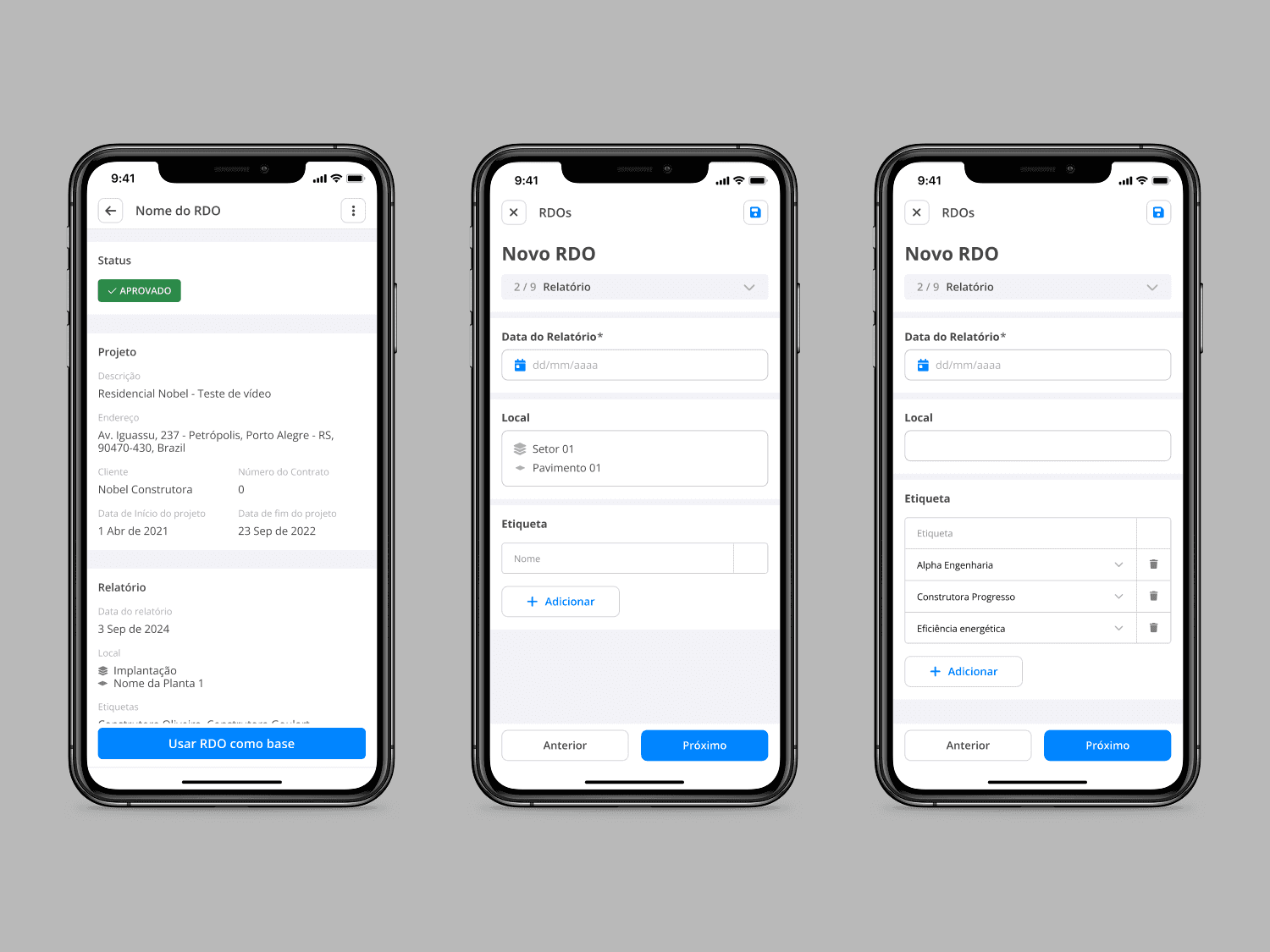
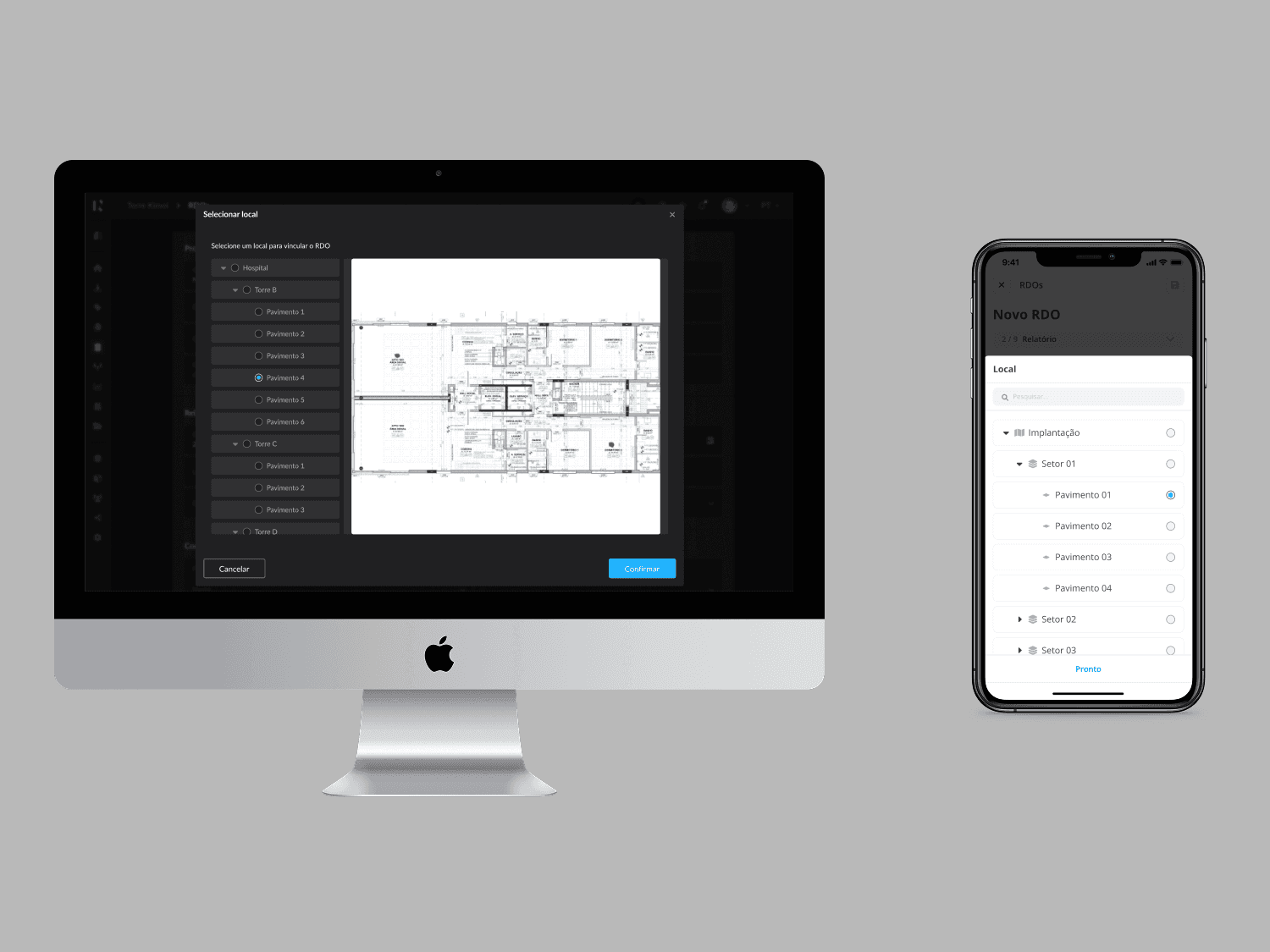
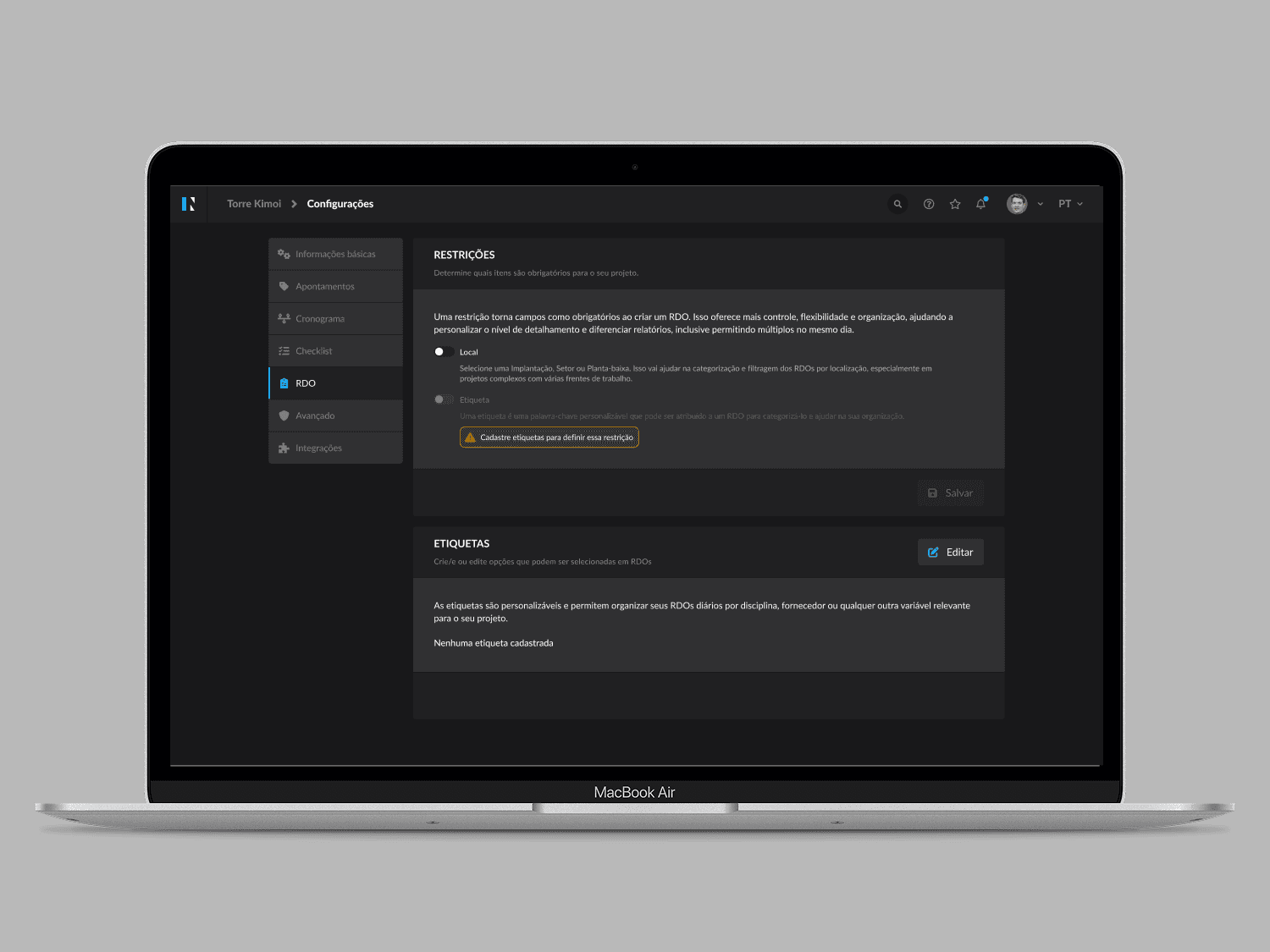
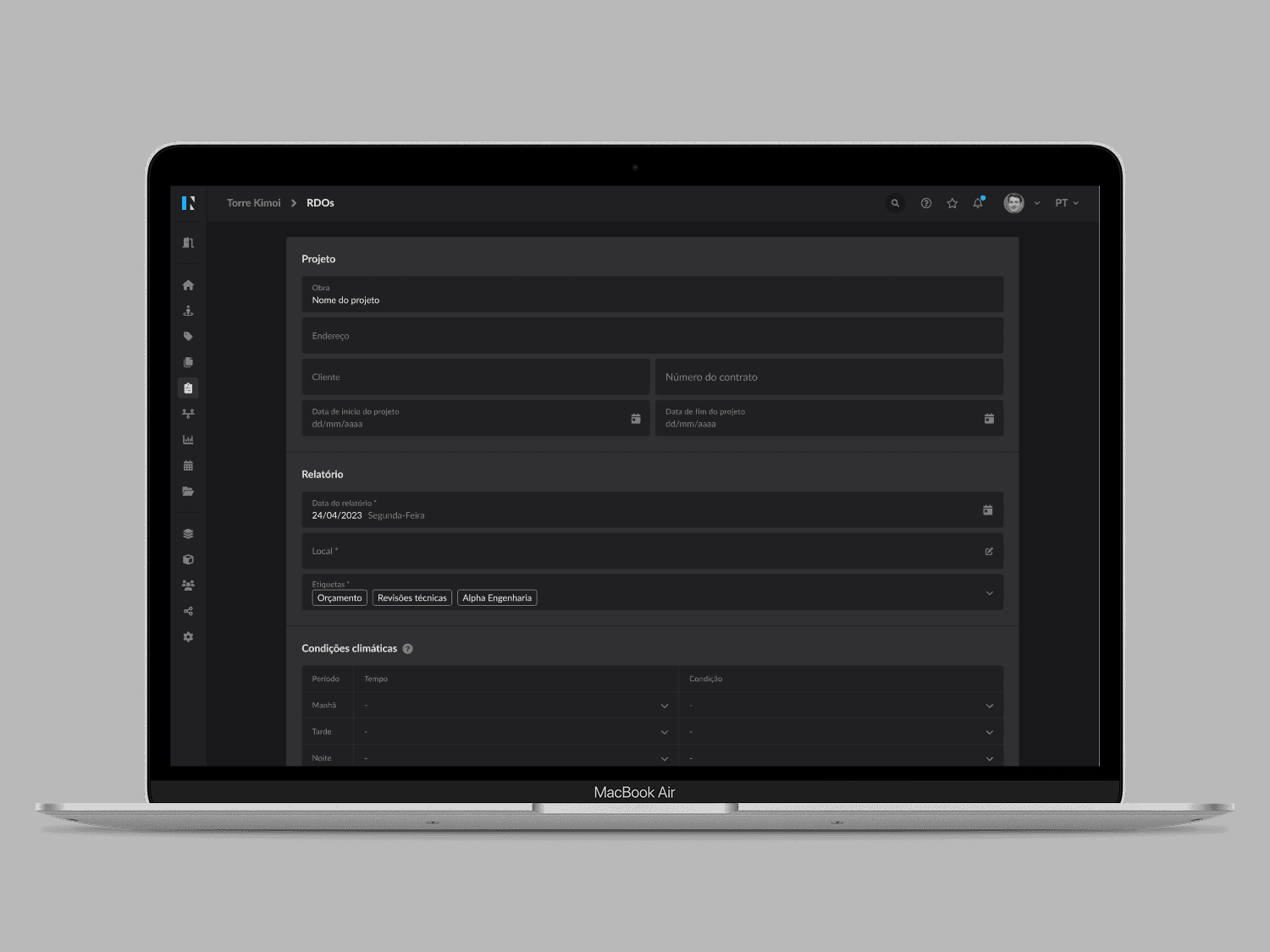
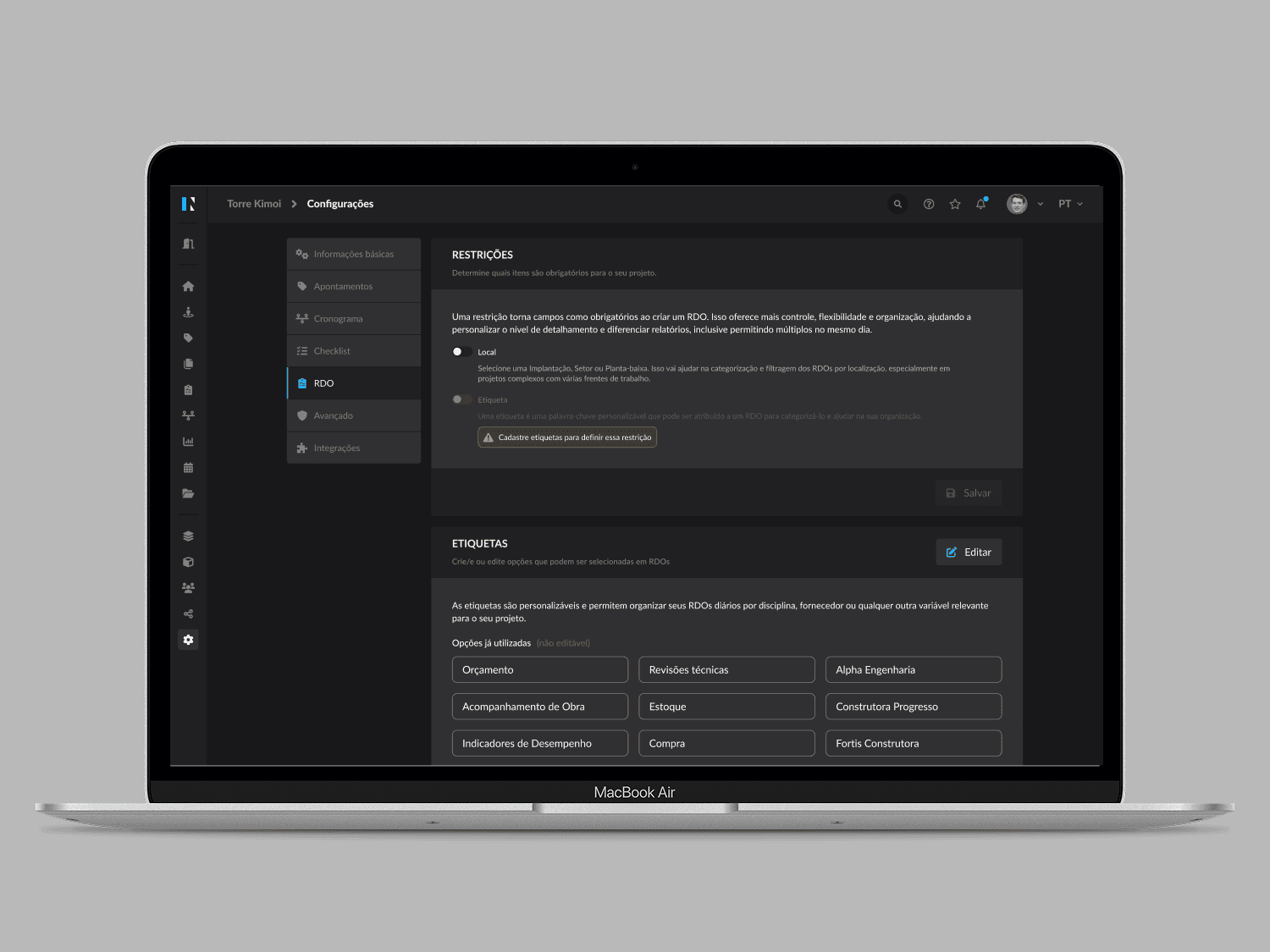
- The ability to select a location when creating a CDR, making it easier to organize and identify by operational areas such as towers or plants. This selection could be optional, or made mandatory by administrators or project owners.
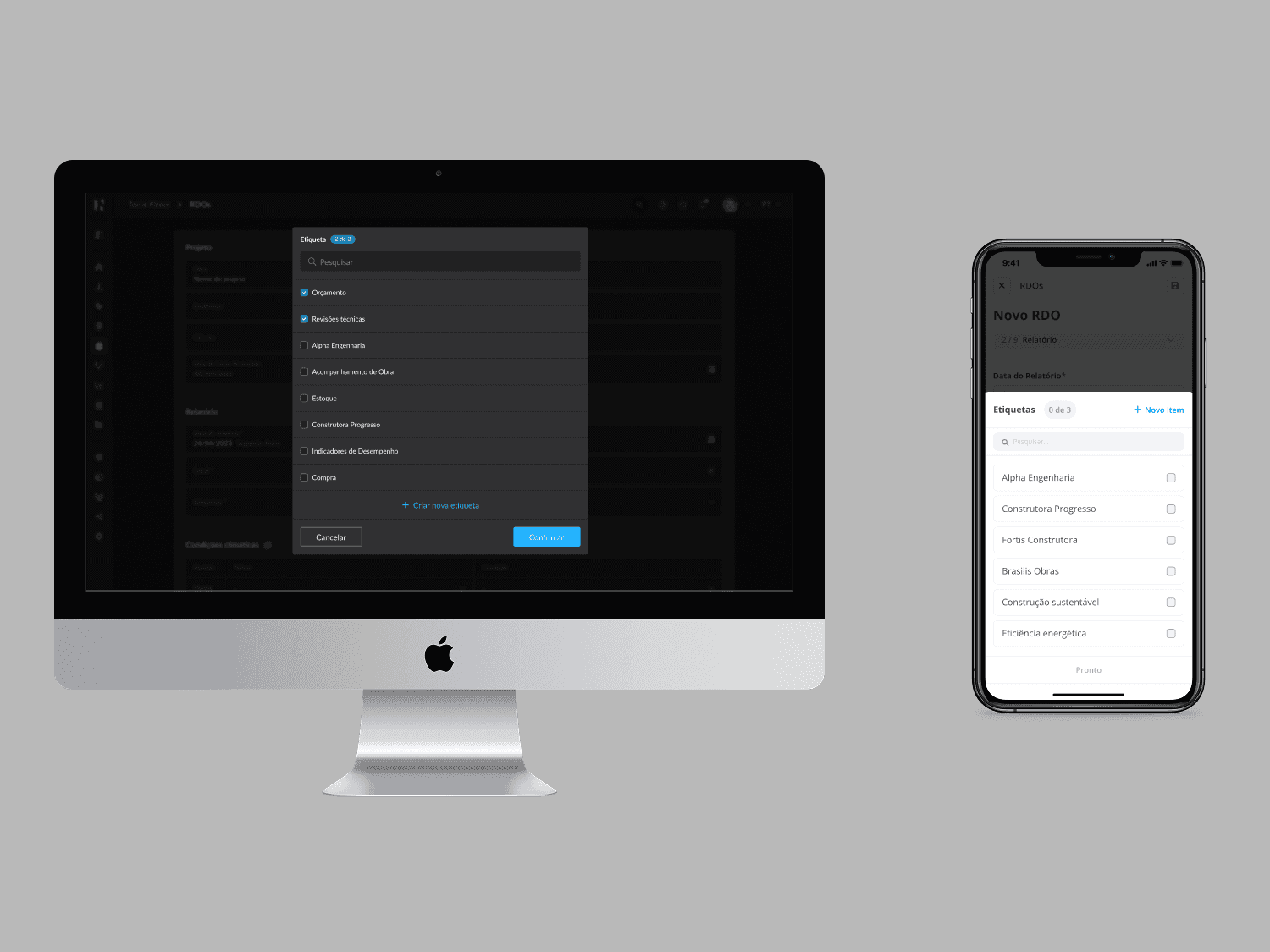
- The addition of custom tags, allowing users to categorize CDRs with specific information, such as suppliers or disciplines, further adapting the platform to their realities.
The flows for creation, configuration, and visualization were adjusted to incorporate these improvements. This allowed unlimited CDRs per day, along with new filters to search and reports that included location and tags.
This solution balanced personalization, efficiency, and stability, aligning with Construct IN’s strategy to centralize information and expand into new markets.
From launch to early learnings
At the time, we defined the following success metrics:
- 20 clients creating more than one CDR per day in the first 30 days
- 15 clients using tags to categorize CDRs in the first 30 days
- 15 clients using the location selection feature in the first 30 days
The tool was launched on March 12, 2025. By March 21, 2025, our team already had some early data: 3 clients actively using the tool. The Location feature was used 20 times in less than 10 days. No clients had yet used the tags feature, but we saw the optional nature of the location field as a positive signal — users were adopting it out of necessity, not obligation.