Platform overview
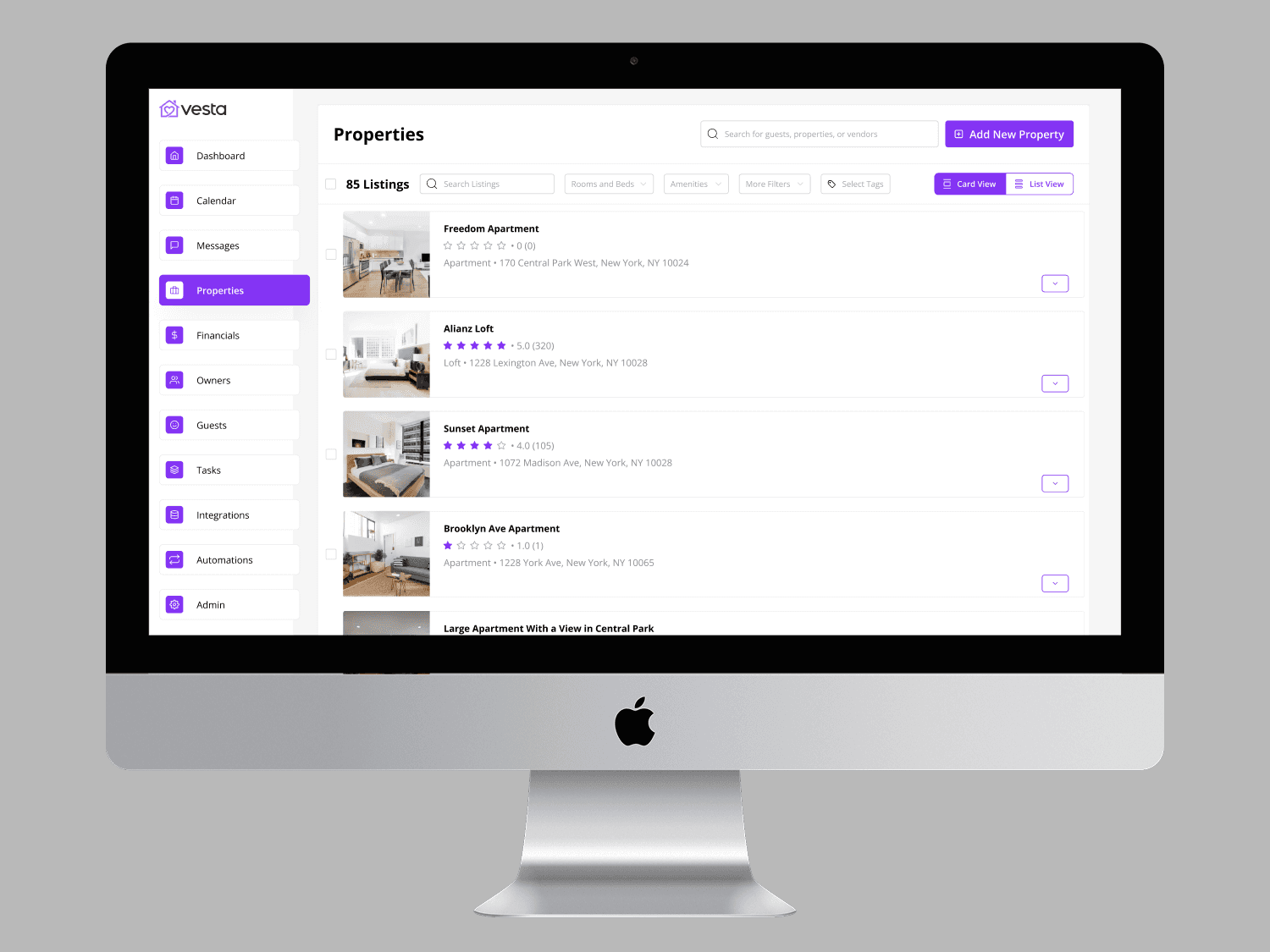
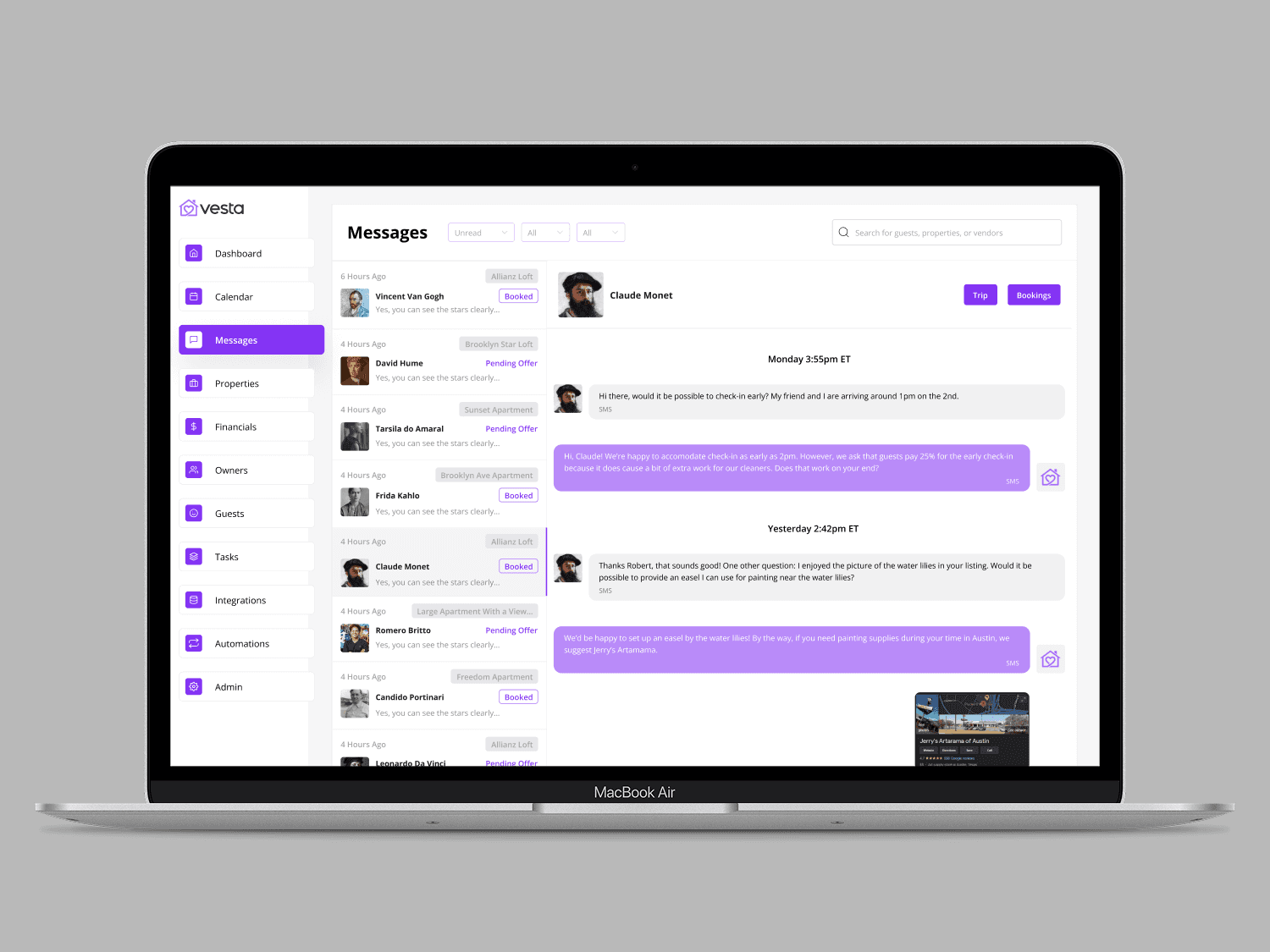
Vesta is a property management software company focused on providing a comprehensive solution for owners of vacation rental properties. With the growth of short-term rental platforms like Airbnb, Booking, and Vrbo, managing multiple properties has become a challenging task for many owners. Vesta’s software aims to simplify this process by offering an all-in-one solution that makes managing vacation rental properties easier.
Design process
At the very beginning of the project, we understood that the delivery timeline was extremely tight. As a startup working on an MVP, the company needed agility. At the time, the team had to present screens to investors urgently, which made it impossible to fully apply all stages of Design Thinking. The first steps with Vesta involved understanding which problems the software would solve and familiarizing ourselves with the visual identity defined by the company.
My role in the project
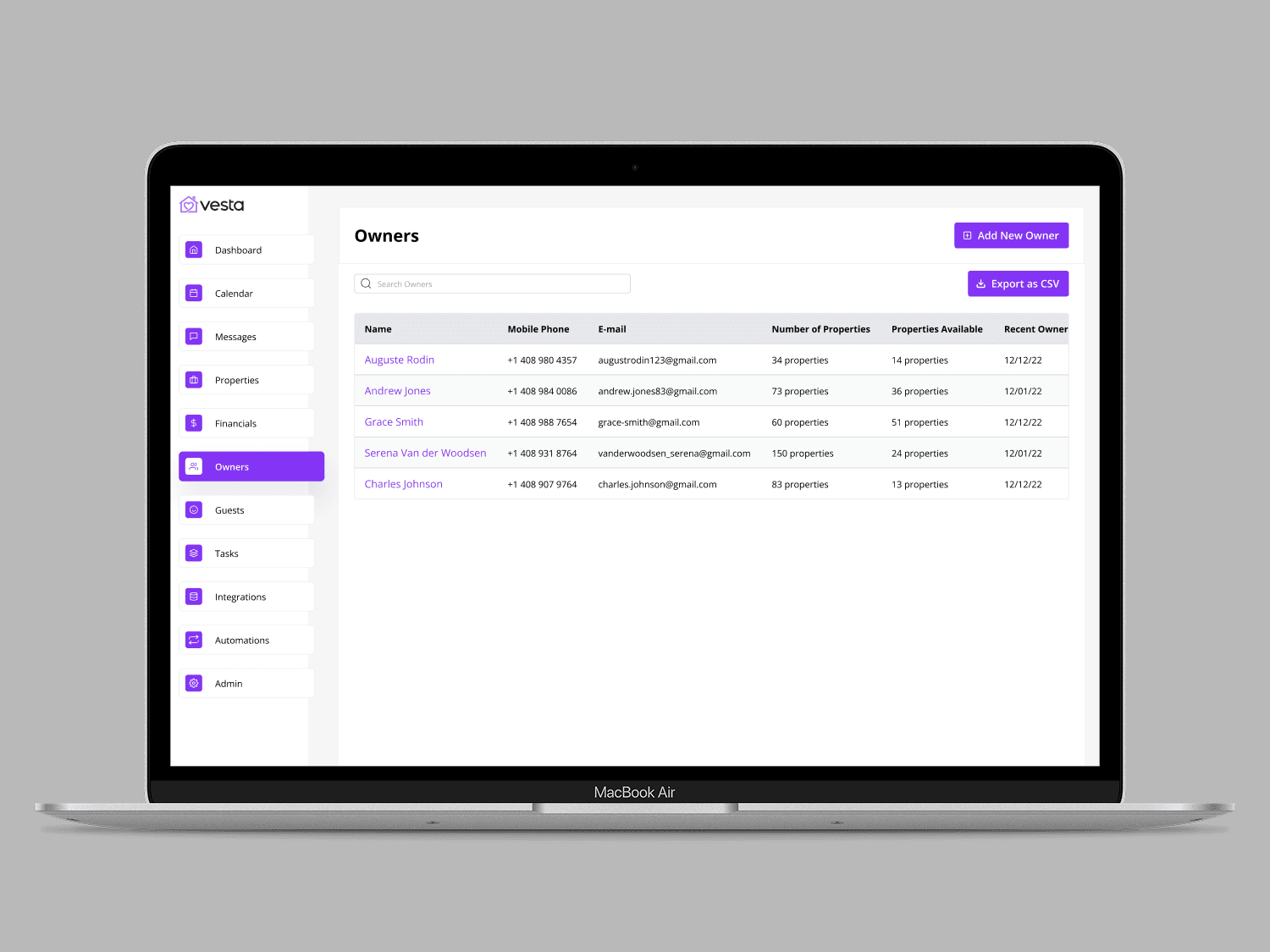
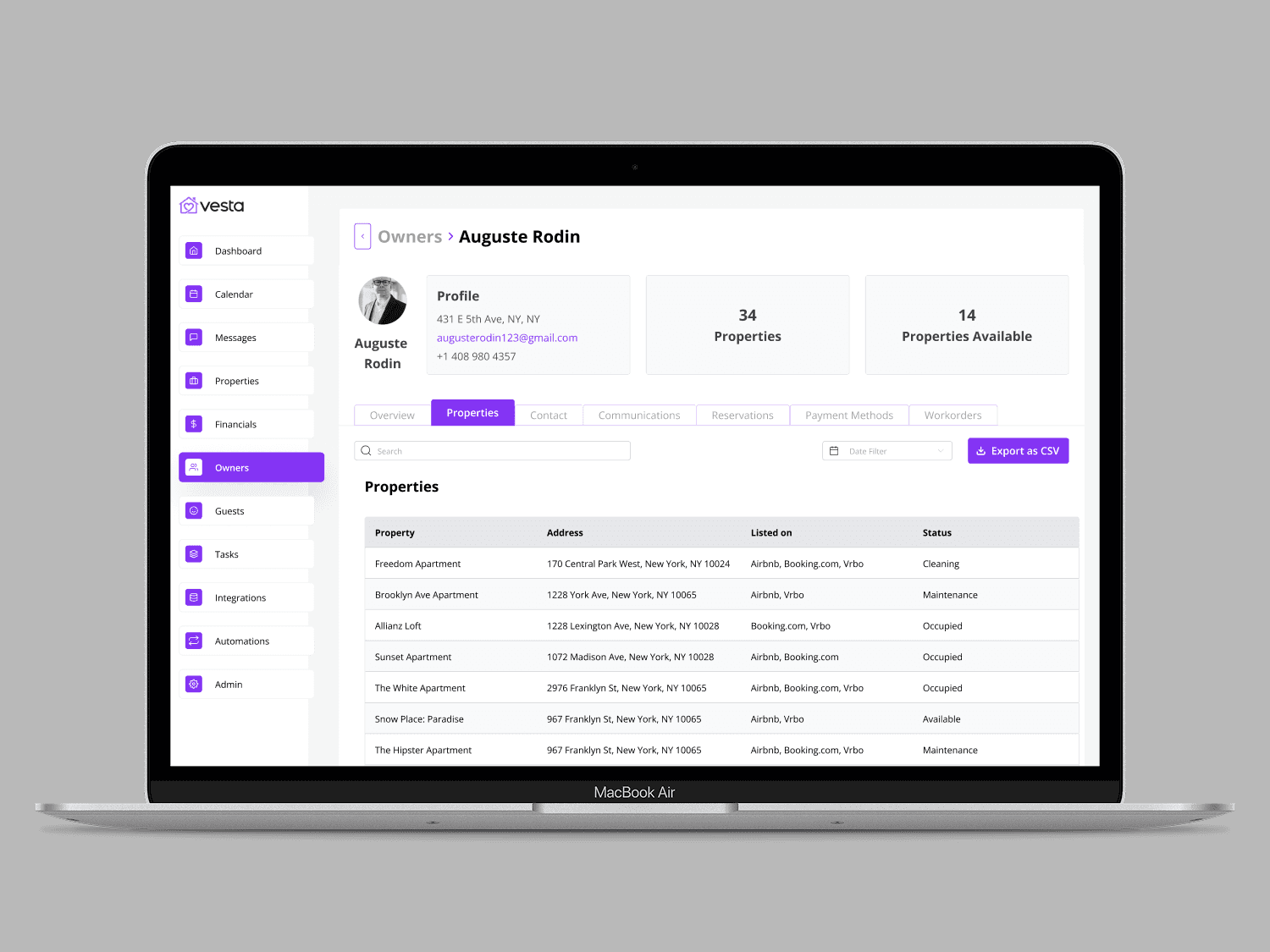
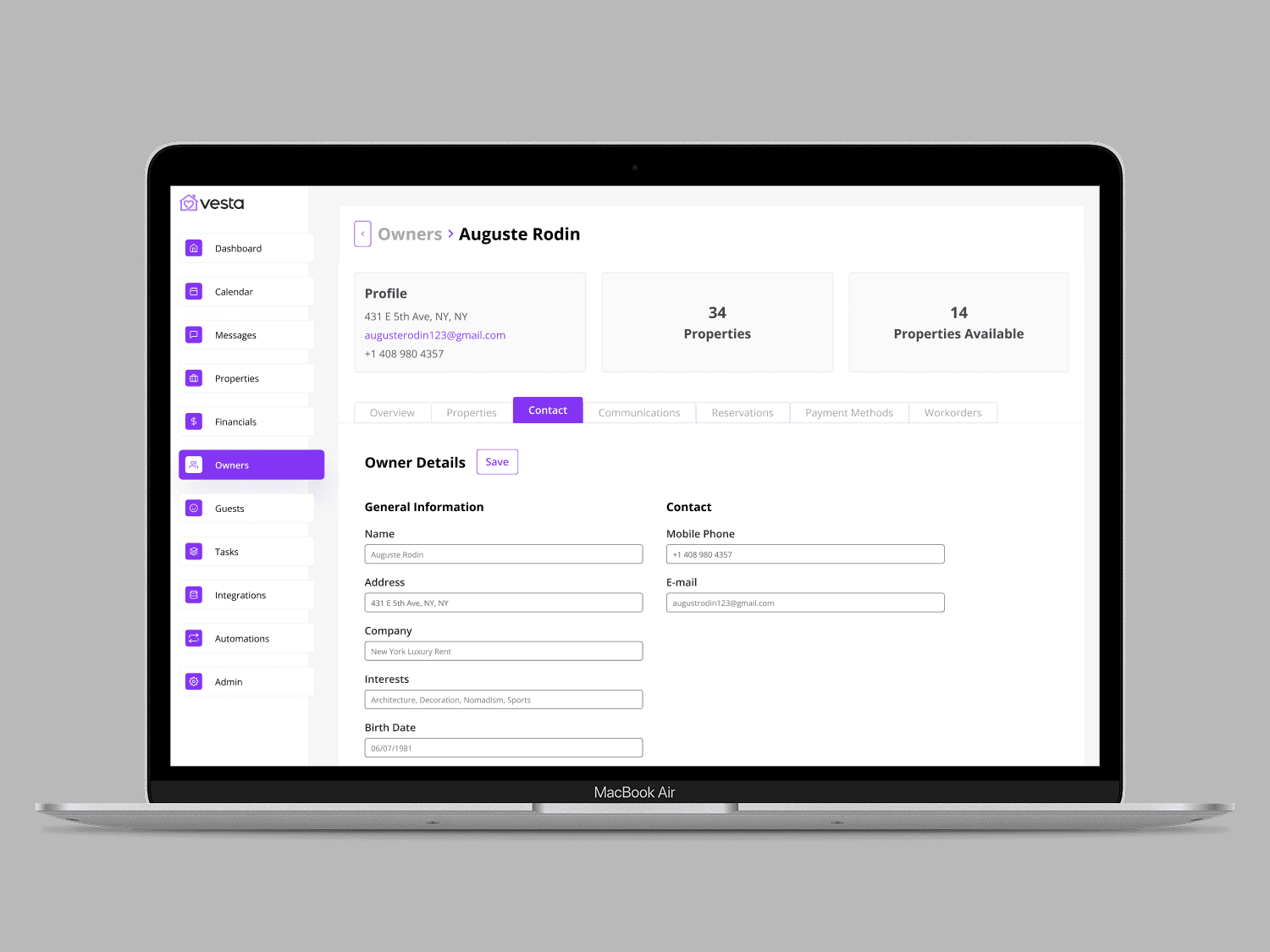
As a product designer at Vesta, I was responsible for creating an intuitive interface that allowed property owners to manage their listings, bookings, and guests easily. I worked closely with the development team to ensure the software was functional, visually appealing, and easy to use. I also conducted user research to better understand their needs and pain points, which informed several design decisions throughout the project.
Research and Features
During the project, we realized that one of Vesta’s main functionalities would be property registration. To ensure alignment with the key platforms Vesta focused on, we conducted desk research to understand how Booking, Airbnb, and Vrbo structure their registration process. Based on these insights, the platform was designed to provide a comprehensive set of features that streamline property management. It includes a centralized dashboard that gives owners an overview of their properties and bookings, a calendar view to manage availability efficiently, and automated messaging and communication tools for interacting with guests. Additionally, the platform integrates seamlessly with major rental platforms like Airbnb, Booking, and Vrbo, offers customizable pricing and revenue management tools, and provides detailed reporting and analytics to support data-driven decision-making.
Lessons Learned
Reflecting on the project, I realized that engaging more directly with users would have provided deeper insights into their real needs. Having a Product Manager would have facilitated communication between design and development, making the process smoother and deadlines more realistic. Early direct engagement with platforms like Airbnb, Vrbo, and Booking would have provided more clarity about their systems, helping to ensure seamless integration with our product. Additionally, greater involvement from the development team in the early stages would have improved delivery planning and reduced challenges related to development timelines.
Challenges faced
During the project, the team consisted of only two designers and a tight schedule, requiring agile work to meet the company’s needs. As we were working through a consultancy, we were not always fully embedded in the client’s day-to-day operations, and limited direct contact with the development team affected some stages of the process.